the black presence in the Old West
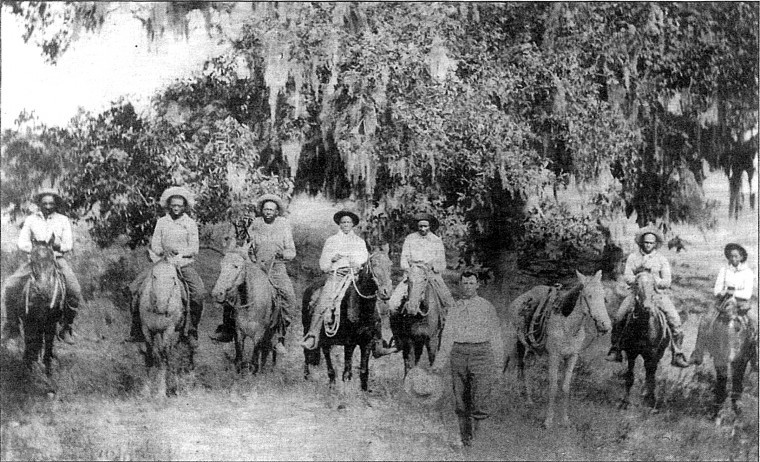
In the real Old West black cowboys were a common sight
interviews with ex-slaves in the 1930s suggested black cowboys benefited from "range equality"
The 1956 John Ford film The Searchers, based on Alan Le May's novel, was partly inspired by the exploits of Brit Johnson, a black cowboy whose wife and children were captured by the Comanches in 1865.
Forgotten Cowboy Display

In popular culture, cowboys are equated with lawlessness. They rob trains and stagecoaches. They ride into town with guns blazing. They have drunken bar fights. Most of the men who engaged in these activities were actually outlaws, not cowboys. According to the New Webster Encyclopedic Dictionary of the English Language, a cowboy is a “…boy who has charge of cows; a man who looks after cattle on a large stock farm and does his work on horseback.”
Black cowboys lived hard lives, but still enjoyed a more dignified existence than those who experienced the emergence of the Jim Crowe laws. They worked on ranches herding and branding cattle, and rode the trails from Texas northward to grasslands or railheads on the plains. They had the same job as their white counterparts but this history was erased with time (McRae, “Black Cowboys”).
Black cowboys are legendary African American figures who drove great cattle herds across the early West, whose images are unfortunately missing from popular culture (“Black Cowboys”).
BBC Documentary


No comments:
Post a Comment