Total Pageviews

Tuesday, August 7, 2012

A Tardy Farewell

de bene esse: literally, of well-being, morally acceptable but subject to future validation or exception

Sad and wholly deserved memorial to slain Jamaican pioneer producer - Winston Riley ...

RECORD producer and songwriter Winston Riley is dead. Riley died in hospital yesterday (19 January 2012) from the effects of a gunshot wound he received last year. He was in a coma since he was attacked and shot in the back of the head in November last year.

Winston, who was the father of Fame FM disc jockey Kurt Riley, had been plagued by a series of violent attacks. He was shot in August last year and later stabbed five times in September. 

Riley...died in hospital yesterday
1/1
Kurt Riley told the Observer this morning that his father's grieving relatives could not figure out a motive behind the attempts on his father's life.

"Unfortunately Daddy didn't wake up so we could talk to him to find out if there was something he was not telling us. He was a straightforward man, who was allergic to hypocrisy," he said.

His entered the music industry at 16 years in 1962, when he formed The Techniques harmony group, which recorded their first tracks for Byron Lee, and then later recorded for Duke Reid. In 1968, he left the group and formed his own Techniques record label, moving into production, producing artistes, Boris Gardiner, The Escorts, Alton and Hortense Ellis, and Johnny Osbourne. His song "Double Barrel" was performed by Dave and Ansell Collins under Riley's production and was one of the first international reggae hits to reach #1 on the Dutch and UK Singles Chart.

His "Stalag" riddim is the most sampled Reggae song of all time. The rhythm was first released in 1973, as the instrumental Ansell Collins track, "Stalag 17", named after the World War II film of the same name. It reappeared later as "Stalag 18", "Stalag 19", "Stalag 20" and "Ring the Alarm Quick".

Riley produced General Echo's hugely influential The Slackest album in 1979, and he went on to launch the careers of Sister Nancy, Buju Banton, Cutty Ranks, Lone Ranger, and Frankie Paul.

The band Widespread Panic recorded Echo's song "Arlene", and have performed many versions of it at their concerts.
Read more: http://jamaica-gleaner.com/gleaner/20080518/ent/ent9.html

Saturday, August 4, 2012

Instagram and Hipstamatic Old Fashioned 'dip 'n' dunk' Photo Booths Still Holding Their Own

de bene esse: literally, of well-being, morally acceptable but subject to future validation or exception

In bars all over the country and at events from weddings to corporate conferences, photo booths lure patrons behind their starchy, cut-off curtains, the two minute wait still provoking the same nervous excitement as it has since the 1920s.

Nostalgia: Old fashioned photo booths are still as popular as ever despite the emergence of digital technology and apps like Instagram and Hipstamatic
LA Times reporter, Gale Holland, believes the preservation of such dated technology in the Instagram era is down to a search for 'authenticity'.

'Photo booth photos are of the moment,' she writes. 'Once the money is plunked into the little metal slot, we have to live with the consequences.'

 Bess Byers, a Venice marketing researcher who snapped herself in Los Angeles bar One-Eyed Gypsy's vintage booth concurred: 'I'm so over digital. With film you only have one shot and that's that. You have to make it count.'

Nostalgia for a time gone by is certainly a big part of the appeal, both as a personal trip down memory lane for merry-makers who grew up with the 'dip' 'n' dunk', and as a classy amenity for owners.
Photo Booth at The Liberty NYC
Photo Booth at Union Pool
Fun: Bars across the country see customers flocking to the tiny booths and waiting in nervous excitement for the photographs that unlike Instagram pictures, you can actually hold
Photo Booth
Photo Booth
Vintage: For those who grew up with photo booths, nostalgia plays a key role in the attraction but experts say the quality of the photograph also far exceeds the digital competition
'The photo booth is very consistent with our venue's brand identity,' Eddy Buckingham, owner of 1950s inspired bar, The Liberty NYC, told us. 'Ours is a venue nostalgic for the mid twentieth century, a time when New York City was establishing itself as the capital of the world.'

Read more: http://www.dailymail.co.uk/news/article-2183409/Say-cheese-As-Instagram-Hipstamatic-photography-old-fashioned-dip-n-dunk-photo-booths-holding-ownn.html#ixzz22dE5pBN7

Life in Imperial Russia

de bene esse: literally, of well-being, morally acceptable but subject to future validation or exception

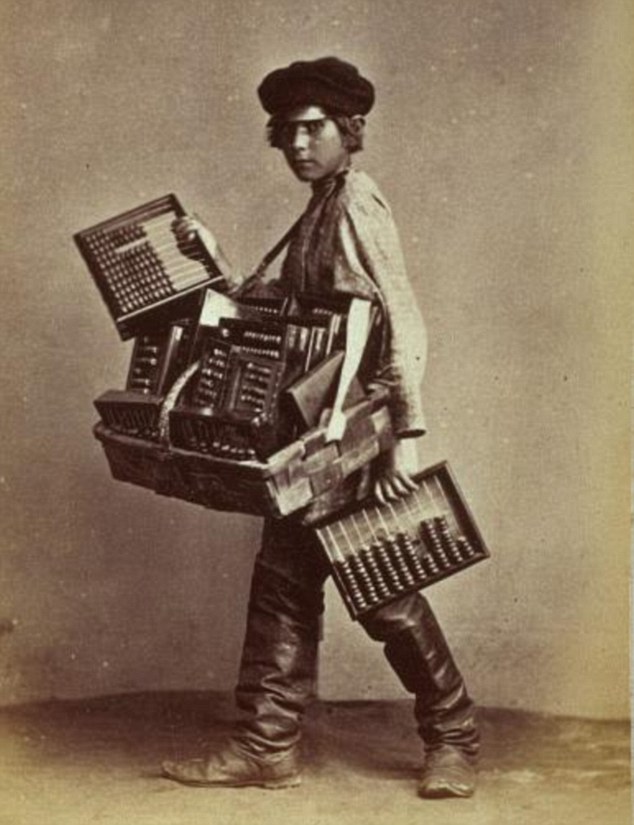
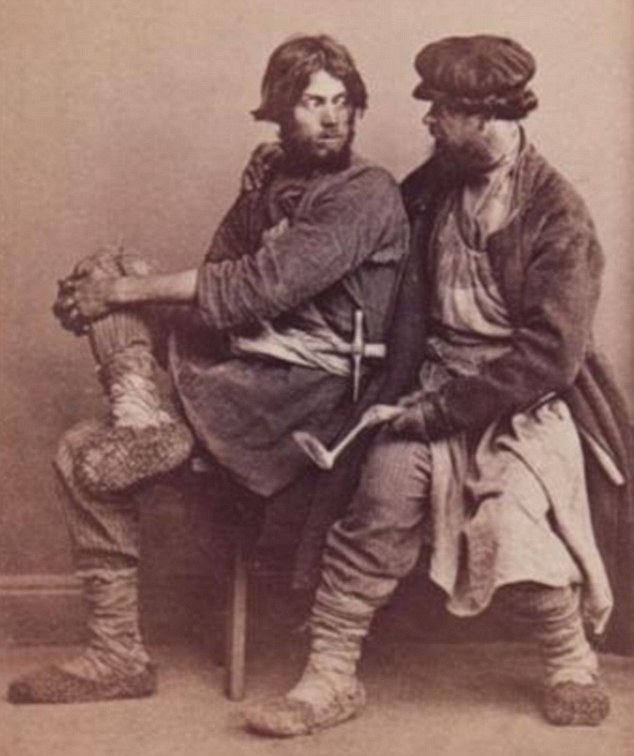
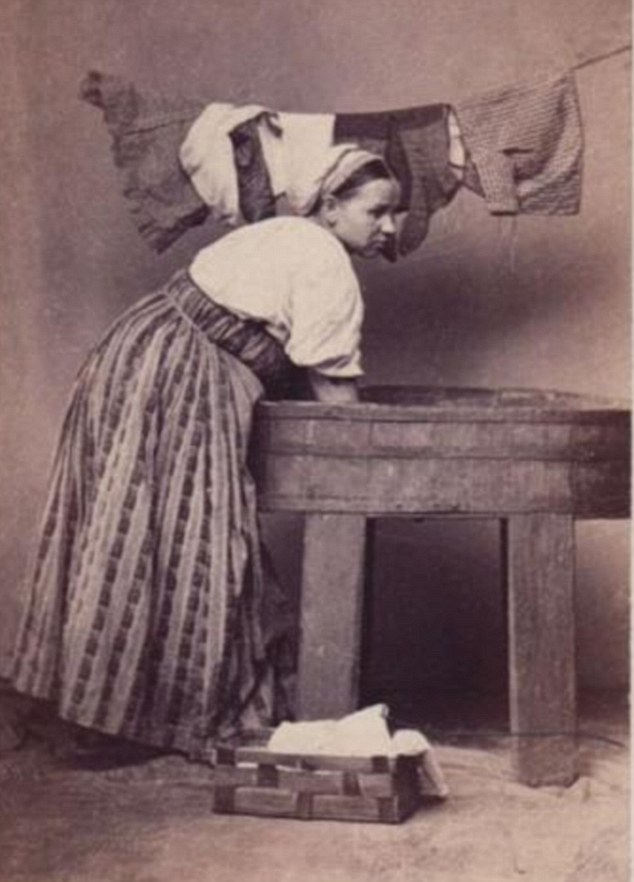
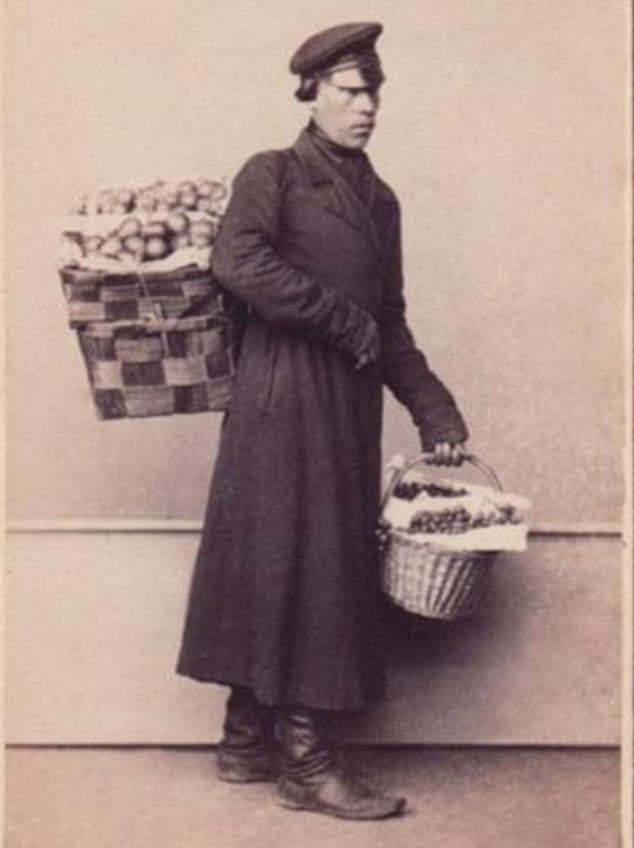
These remarkable pictures show the lives of Russian peasants living in the 1800s.
Taken by Edinburgh-born artist William Carrick he was born on New Year's Eve in 1827 and months later was taken to Russia where he grew up.
He studied painting at the St Petersburg Academy of Arts and studied in Rome.
William Carrick took a picture of this abacus seller in his St Petersburg studio in Russia. The Edinburgh-born photographer took some of the most remarkable pictures of Imperial Russia
Carrick was born on New Year's Eve in 1827 and later moved to Russia with his family. He returned to Edinburgh where he took up photography and later opened a studio in St Petersburgh

A Russian woman does her washing and was one of the many people who was photographed by Carrick

A vendor with his vegetables poses for Carrick and his assistant McGregor during the 1800s

During one of his visits to Edinburgh, he took photography lessons and met John McGregor who returned with him to St Petersburg.

In 1859 he opened one of the first photographic studios and McGregor worked with him as an assistant.

Together the pair travelled rural Russia capturing the lives of peasants living and working in Russia.

Carrick did this to boost his income and keep his studio afloat. The pictures satisfied the curiosity of tourists and the public who found Russia's peasants fascinating.
The pictures, which are dated from the 1860s to the 1870s, include the lives of those working in the busy streets of St Petersburg, from street vendors to musicians and chimney sweeps.

Another set of pictures records the life and labour of Russian peasants in the Volga Region of Simbirsk.
They are seen at work in the fields and at rest and many happily posed for the camera. This would have been the first time many of them had seen one.
Carrick often spent months travelling with his assistant and was known for his compassionate nature.
McGregor died in 1872 and Carrick continued to take photographs until he died of pneumonia in 1878.

Read more: http://www.dailymail.co.uk/news/article-2183755/Remarkable-pictures-taken-Edinburgh-photographer-captures-lives-peasants-people-living-Imperial-Russia.html#ixzz22dAi5Rhg

Bizarre 19th-century Humour

de bene esse: literally, of well-being, morally acceptable but subject to future validation or exception

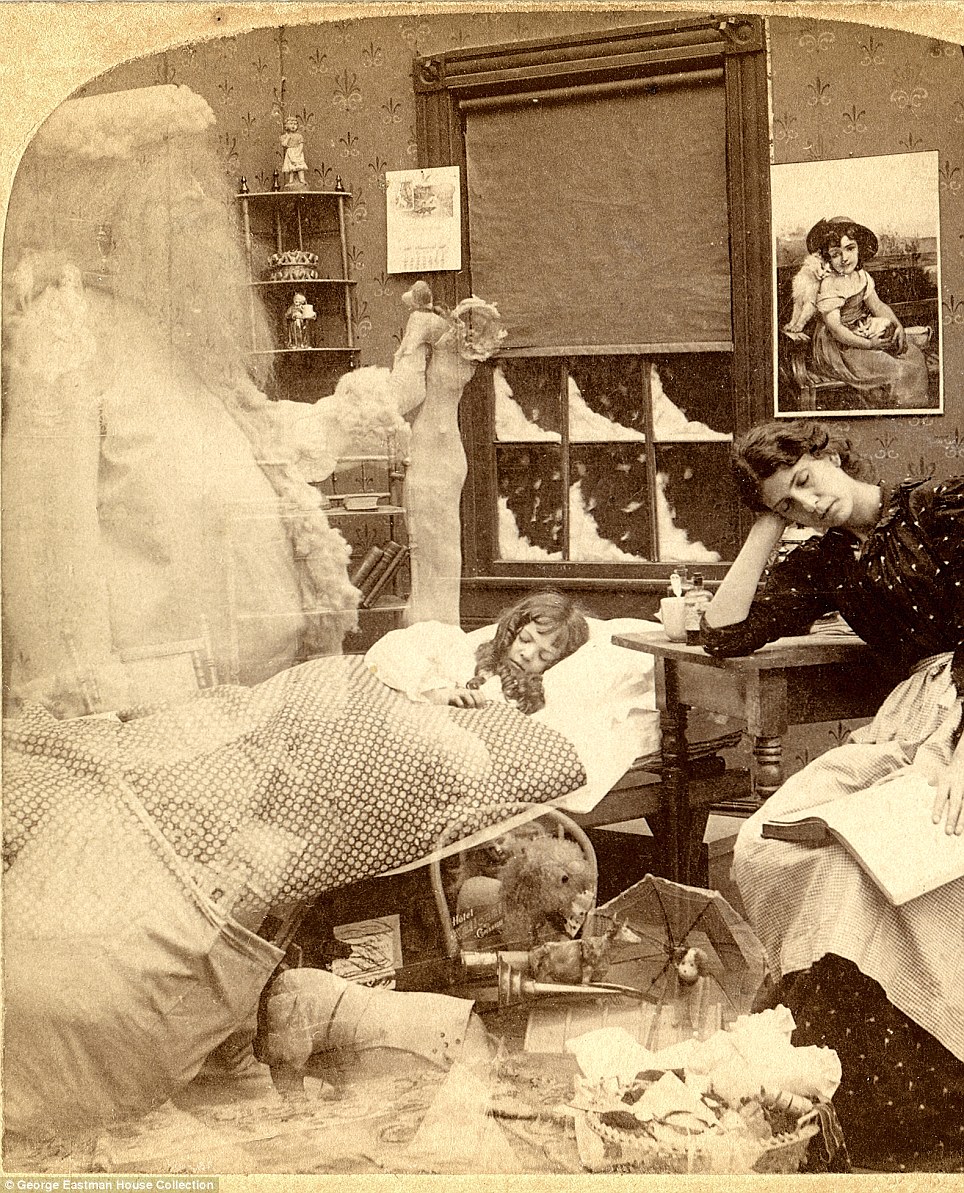
Photographers in the late 1800s had a macabre sense of humour, as seen in this series of trick pictures dating back to the Victorian Age.
In a photo montage from the George Eastman House Collection, manipulated snapshots include a Albumen print of a decapitated man holding his head and butcher knife dripping with blood, an attack scene of an aggressor dressed in a suit of armour and a man's face superimposed on a mummy, gazing squarely ahead at onlookers.
The picture collection, dated circa 1875, shows photographers experimenting with the new technique in their work.
The special effect, known as 'trick photography,' was developed in 1856 by the Swedish-born photographer Oscar Rejlander. He compiled a series of negatives to make-up the renowned image, The Two Ways of Life.

A Dream of Christmas
A dream of Christmas: Dated 1897 by Strohmeyer & Wyman

but you ought to see the other fellow!
You ought to see the other fellow: A pup shows his wounds in this print dated 1885

Surreal Account of Lennons' Live-in Assistant in Last Days of The Beatles

de bene esse: literally, of well-being, morally acceptable but subject to future validation or exception

‘It’s Allen Ginsberg and he’s f****** naked.’ I didn’t know John Lennon then, but the Liverpool accent was unmistakable. The date was June 3, 1965 and we were celebrating the 39th birthday of our friend Allen, the Beat poet.
He was standing in a corner, stark naked with a drink in his hand, surrounded by people trying to get a peep. He loved to take his clothes off, especially in a crowd. I turned to see John and the other Beatles staring at Allen with amused looks on their faces. The Beat scene was spreading into the mainstream.

My wife Jill and I made a lot of new friends. Among them were John Dunbar, who ran the Indica Gallery in Mayfair, and the girl who was soon to become his wife: the young singer Marianne Faithfull. She was beautiful, with an aura of vulnerability and innocence.

                                                                           * ~ *
I had an ongoing problem with heroin, needing it daily, but now I had to find it for John and Yoko too. I took the train into London every day to look for work and buy heroin for myself and for them.

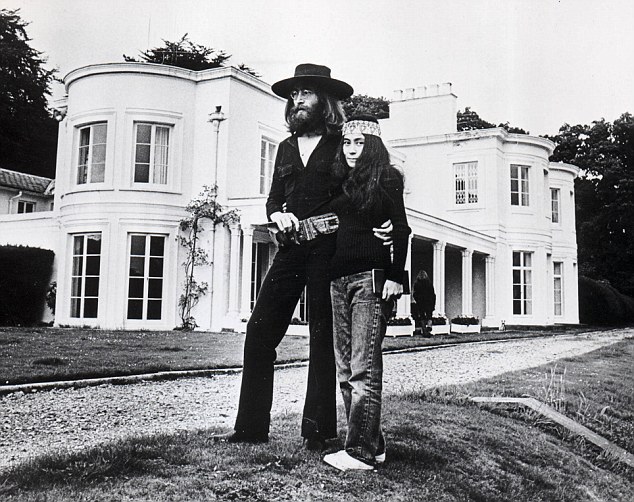
Meanwhile, they were moving into Tittenhurst Park, their new 85-acre estate in Ascot with its mansion framed by lawns, stately trees and great walls of rhododendrons, camellias and azaleas.

There was plenty of room there, so Yoko and John invited us to join them. Yoko and Jill were very close and I was getting us dope. It was a good solution for all of us.
One Friday in August 1969, I clunked into the house in my wellingtons to see The Beatles sitting round like morose pop demigods.
John and Yoko at Tittenhurst Park, their 85-acre estate in Ascot with its mansion framed by lawns, stately trees and great walls of rhododendrons, camellias and azaleas

They had come to Ascot for a photoshoot to promote their Abbey Road album. It was one of their last meetings together and the atmosphere was tense. Paul and John were arguing over everything. Apple, their company, was haemorrhaging money.
Paul had begun telling the others what to do, particularly during recordings and John was angry and disillusioned. The Beatle dream was just about over.

John had discovered that Yoko was willing to be his foil: his lover, attendant, teacher, and prime minister. Imagine how effective it was for his purpose of breaking up The Beatles to always have her present at recordings and meetings. This, of course, increased the howls of derision directed at her.

Meanwhile, she was trying to transform herself into a rock star, but her singing was not going well. She had a way of wailing when she sang that belongs in a Japanese temple, not on a rock stage. The word ‘yowl’ was used to describe it. John would not hear a word of criticism, but the more she sang, the more the people at Apple couldn’t stand her. To them, she was not only an interloper but a terrible singer to boot.
Read more: http://www.dailymail.co.uk/tvshowbiz/article-2183619/Dan-Richter-book-John-Lennon-Yoko-Onos-live-assistant-describes-dark-days-The-Beatles.html#ixzz22d6hOfTG

Remnants of the Manhattan Project Mission

de bene esse: literally, of well-being, morally acceptable but subject to future validation or exception

It's almost 70 years since America ushered in the atomic age and, as the threat of nuclear weapons remains, the remnants of the Manhattan Project are still visible across the United states.

Photographer Martin Miller traveled to two nuclear-explosives production facilities constructed during the infamous mission to build the world's first atomic bomb - a uranium production plant in Oak Ridge, Tennessee, and a full-scale plutonium protection reactor in Hanford, Washington.

His incredible photographs document the stark, now abandoned sites, where between 1939 and 1945 America's top scientists developed 'The Gadget', as it was code-named throughout its development, and explosives used in the nuclear weapons detonated over Hiroshima and Nagasaki, Japan.
Explosive work: The B Reactor Control Console which was completed in Hanford Nuclear Reservation, Washington in 1944 and used to source plutonium for the Nagasaki Bomb

The Manhattan Project was sparked when Albert Einstein wrote to then President Franklin D. Roosevelt informing him that Nazi Germany was working towards a similar end-game. The U.S. government almost immediately expedited research into developing a viable atomic bomb.

Mr Miller said it was difficult to visit the historic sites 'without experiencing a sense of awe at what was accomplished'.
 
'The scientific, engineering, managerial, labor, and logistical challenges that were met and overcome are separately impressive but, taken together, simply astonishing.'
But he added that appreciation of the monumental achievements of the Manhattan Project could not be considered 'without a pang of regret at what it unleashed into the world.'

B Reactor, Source of Nagasaki Bomb Plutonium, Hanford Nuclear Reservation, WA 1944
Engineering feat: A modern day photograph shows the outside of the reactor at the Hanford Nuclear Reservation, which was completed in 1944
 B Reactor Front Face, Source of Nagasaki Bomb Plutonium, Hanford Nuclear Reservation, WA 1944
B Reactor Front Face, Source of Nagasaki Bomb Plutonium, Hanford Nuclear Reservation, WA 1944

 After six years of work, at 5:29am on July 16, 1945, the first atomic bomb was detonated in a white blaze that stretched from the basin of the Jemez Mountains in northern New Mexico to the still-dark skies.
 
As the orange fireball shot upwards at 360 feet per second before forming the characteristic mushroom cloud of radioactive vapor at 30,000 feet, the U.S. government's good intentions had given birth to the monstrous reality that still hangs over civilisation.

An untested uranium bomb was then dropped on Hiroshima, while a plutonium bomb was dropped on Nagasaki, causing the Japanese to surrender.
Ready to blow: Left, the 'Fat Man' 21-kT Atomic Bomb from 1945 which was later dropped on Nagasaki. Right, 'The Gadget' 19-kT Atomic Bomb also from 1945

At work: A historical picture taken during the plants' working years show two men at the 'gaseous diffusion converter'

Exacting work: The 'Calutron Girls' at their control panels where electromagnetic separation was accomplished during the gathering of uranium

B Reactor Valve Pit Controlling Cooling Water, Hanford Nuclear Reservation, WA 1944

Read more: http://www.dailymail.co.uk/news/article-2181880/Ruins-Manhattan-project-Haunting-images-remnants-mission-build-atomic-bomb-World-War-II.html#ixzz22ch3WieB


Haunting Images of Forgotten Palaces

de bene esse: literally, of well-being, morally acceptable but subject to future validation or exception

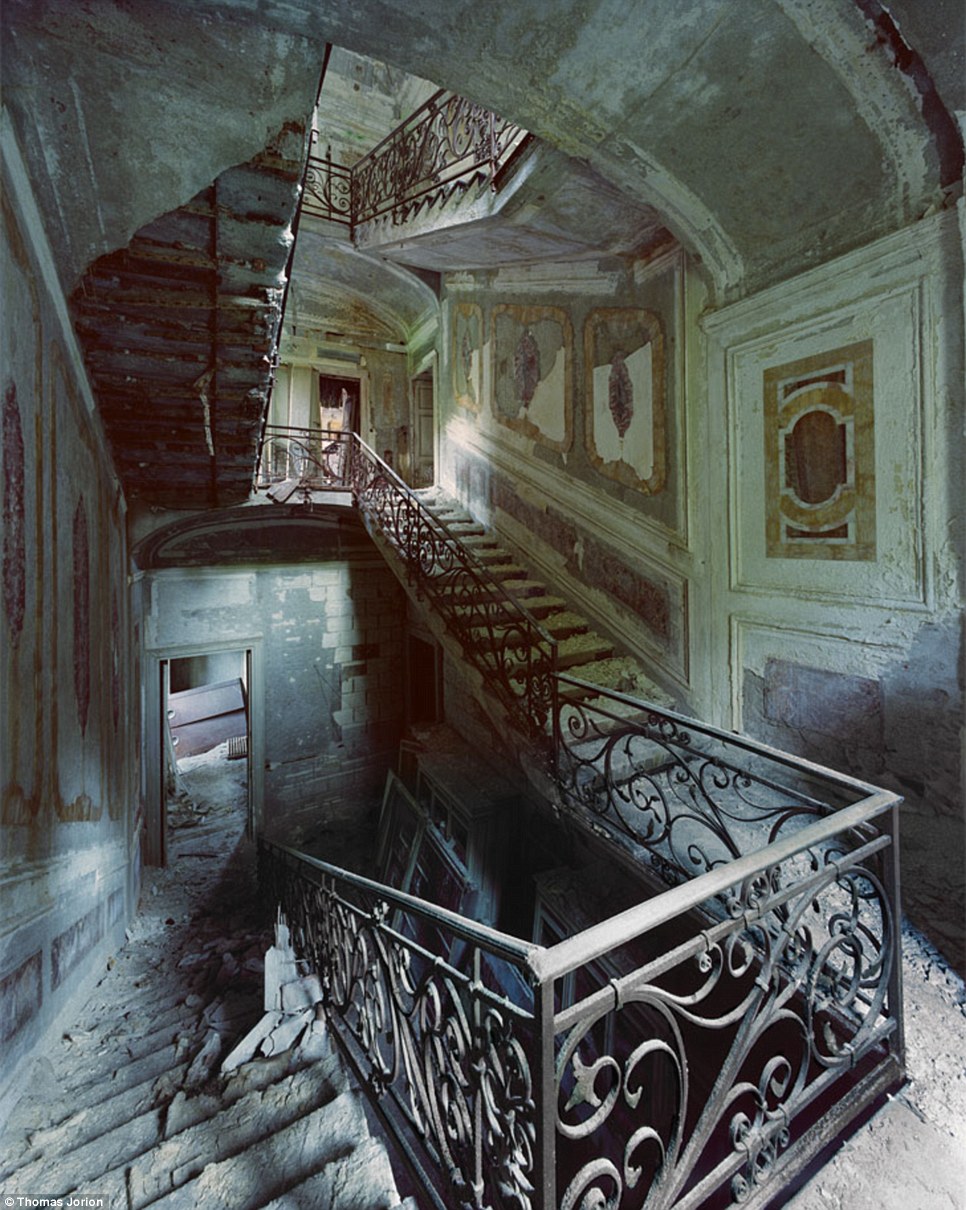
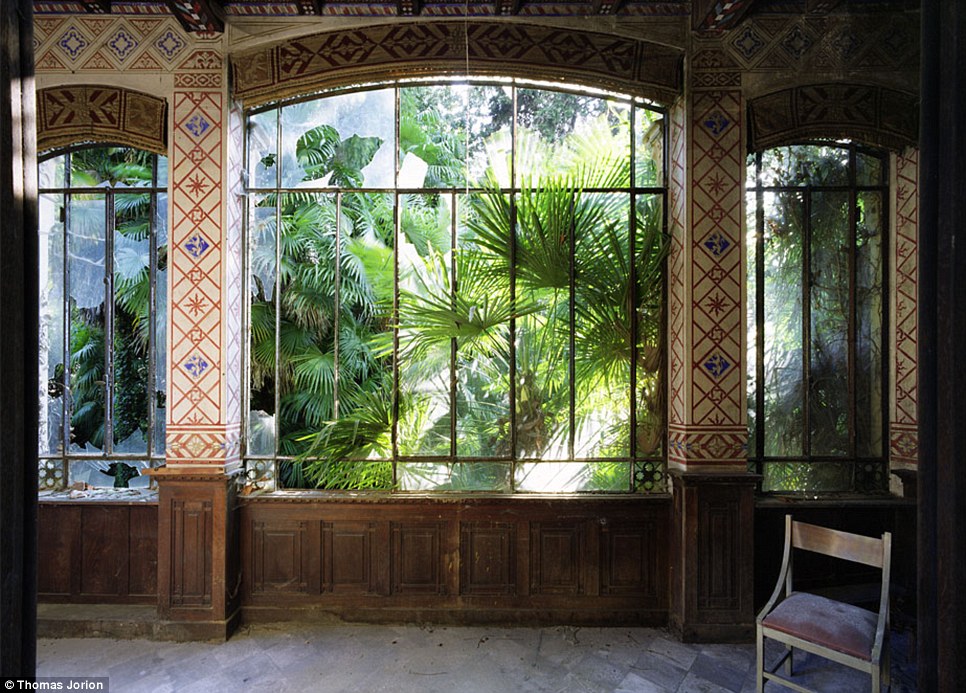
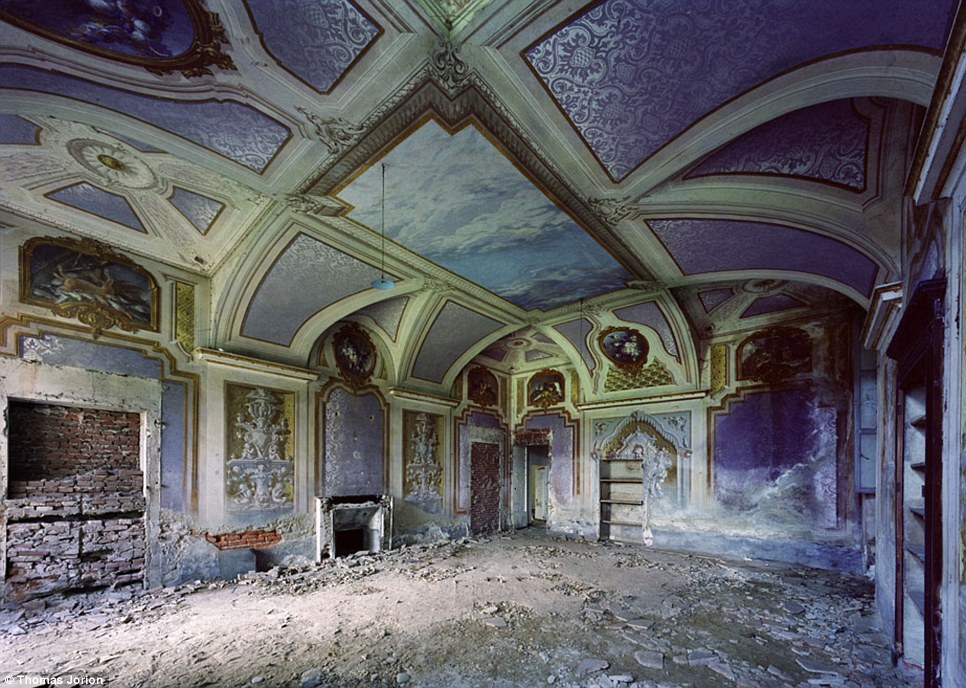
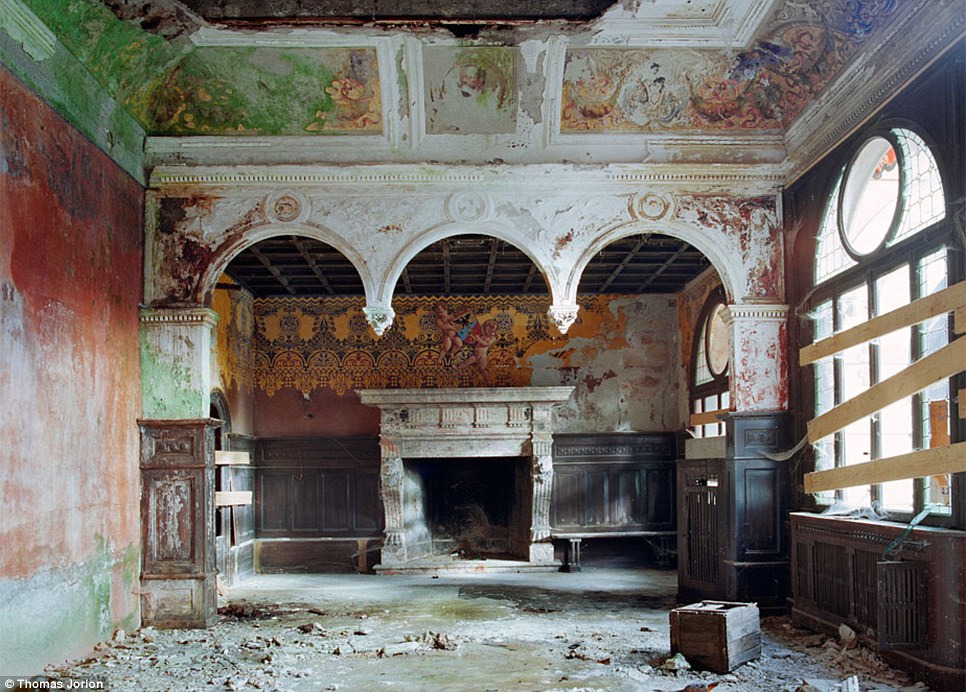
A grand staircase lies in ruins - the steps have crumbled; its ornate railings covered in dust. On the decaying, bare walls, a splash of coloured panelling provides the last vestige of splendour.

This once-great Italian villa would most likely have been home to nobility during the Renaissance - but now, it and many others have been abandoned.

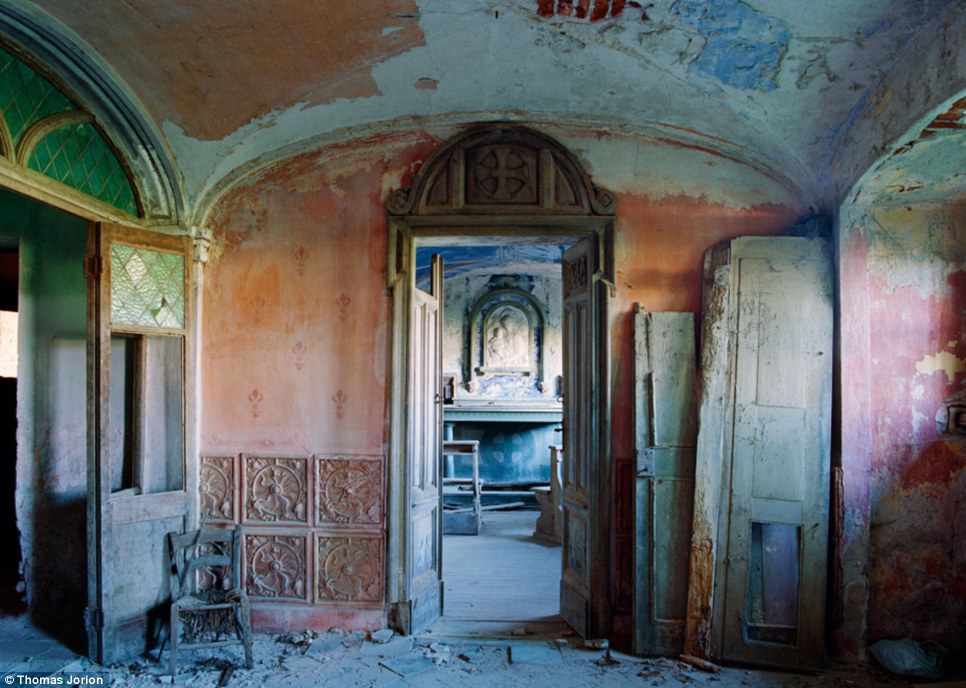
Yet there is still beauty to be found - frescoes depicting angels and rustic scenes, and vaulted ceilings which have managed to ward off the ravages of time.

To document their sad demise, photographer Thomas Jorion has roamed the north of the country - from Piedmont and Lombardy to Tuscany and Emilia Romagna - for his gallery series, entitled Forgotten Palaces.

A villa lies abandoned in the north of Italy, its once-grand staircase reduced to rubble
To document the demise of the properties, photographer Thomas Jorion travelled from Piedmont and Lombardy to Tuscany and Emilia Romagna
For the most part, the palaces and villas lie in economically distressed areas

For the most part, the villas lie in economically distressed areas with poor communications.
However, there are cases where family tensions have been the cause of the residences' downfall.

In one instance, the construction of a nuclear power plant nearby led to the abandonment of the village and the house master.
There are believed to be more than 300 Italian ghost villages, or 'paesi fantasma', many dating from medieval times.

Residents have left such villages for reasons ranging from landslides to migration to big cities.

The term 'villa' originally applied to the suburban summer residences of the ancient Romans and their later Italian imitators.

Roman villas were often asymmetrical and were constructed with elaborate terracing on hillsides - with long colonnades, towers, gardens with reflecting pools and fountains, and huge reservoirs

Intricate artwork still adorns the vaulted ceiling of this abandoned property
 
In the 15th century, Italians began uncovering ancient ruins and modelled their own buildings after Roman prototypes

At their rural retreats, the elite could engage in their scholarly - and leisure - pursuits


Thursday, August 2, 2012

Ancient Map of “America” Found in Germany

de bene esse: literally, of well-being, morally acceptable but subject to future validation or exception 


Image Caption: The surprise find in the stacks at Munich University Library: The segmented world map made by Martin Waldseemüller (ca. 1507). Source: Munich University Library [ More Images ] 
 
In time for Fourth of July festivities, Librarians at a German university announced that they have found a 500-year-old version of a world map that was the first to have mentioned “America.”

The librarians were unaware of the map’s presence until they found it stashed away inside an unrelated 16th century Geometry book.

The map does not pre-date the 1507 map that Germany officially handed over to the U.S. back in 2007, which now lies in the Library of Congress in Washington.

The newly discovered map is believed to have been drawn by German cartographer Martin Waldseemueller, who died in 1522, according to the Ludwig Maximilian University of Munich.

The new map shows the world divided into twelve segments, which taper to a point at each end and are printed on a single sheet. When the map is folded out, it forms a small globe, with three rightmost segments depicting a boomerang-shaped territory named America.

The university said in a written statement that only four copies of the segmented maps were previously known.  One of the four was sold at an auction for a million dollars back in 2005.

According to the university, the fifth map was found by a bibliographer, who was revising the catalogue “in an otherwise unremarkable volume that had been rebound in the 19th century.”
“Even in our digital age the originals have lost none of their significance and unique fascination,” Klaus-Rainer Brintzinger, the head of the library, said in the statement. “We intend to make the map accessible to the public in digital form in time for the Fourth of July, Independence Day in the USA.”

Waldseemueller helped create the name “America” in honor of explorer Amerigo Vespucci, who he mistakenly believed discovered the New World.

Sven Kuttner, head of the library’s old books department, said the map was a “sleeping beauty” in the university’s collection until its recent unearthing.


Source: Lee Rannals for redOrbit.com - Your Universe Online

redOrbit (http://s.tt/1gQ1v)


Hollywood Party, 1952

de bene esse: literally, of well-being, morally acceptable but subject to future validation or exception

Loomis Dean—Time & Life Pictures/Getty Images
Not published in LIFE. Marilyn Monroe attends an awards night at the Club Del Mar, Santa Monica, Calif., 1952.
It is a scene out of a movie but in this case, it is nothing less than a pivotal moment in a real-life Hollywood legend’s life: Clad in a show-stopping velvet dress and fur stole, a young Marilyn Monroe glides across the floor of the Club Del Mar in Santa Monica, Calif., in January 1952. The starlet is there to receive an award from Hollywood’s Foreign Press Association.

The blonde bombshell captivates the room. She is single, and few men that night fail to notice her.  In more ways than one, and that no one could possibly have imagined, the 25-year-old Marilyn’s life was about to change. A mere month and a half later, in March 1952, she went on her first date with a major league baseball legend named Joe DiMaggio. They wed in 1954 (although the storybook marriage lasted nine months, before Monroe files for divorce on the grounds of “mental cruelty”).

Beyond the upheavals in her personal life, the actress’ career was about to truly take off: by the end of the year she would perform in her first starring role, alongside Richard Widmark in the thriller, Don’t Bother to Knock, while in 1953 she starred in three major movies — the noir-tinged Niagara and the romantic comedies Gentlemen Prefer Blondes and How to Marry a Millionaire - each title a bigger box-office hit than the one before.

Six decades after that night at the Club Del Mar, LIFE.com offers a gallery of pictures (none of which ran in LIFE magazine) by photographer Loomis Dean, who captured the young Marilyn on the cusp of stardom — and in the midst of what might well have been the last genuinely carefree time in a life that would endure more and more pain, controversy and heartache as the 1950s rolled on.

[Buy the LIFE book, Remembering Marilyn.]

Relay Through History

de bene esse: literally, of well-being, morally acceptable but subject to future validation or exception
Herb Mckinley to Usain Bolt

Lincoln Scrawled This Note to Save a Soldier’s Life

de bene esse: literally, of well-being, morally acceptable but subject to future validation or exception
People are like stained-glass windows. They sparkle and shine when the sun is out, but when the darkness sets in, their true beauty is revealed only if there is light from within. - Elisabeth Kübler-Ross                                                
LincolnPardon
Courtesy the National Archives


The Foundation for the National Archives  is a national treasure that includes - George Washington’s handwritten First Inaugural Address, Annie Oakley’s letter to President McKinley volunteering to muster a battalion of lady sharpshooters for the Spanish-American War, the $7.2 million check that bought Alaska in 1868 - the prize by far was a brief note scrawled at the bottom of a sheaf of legal papers.
In 1863, the Army’s Judge Advocate General sentenced Michael Delaney to death for deserting his Colorado regiment in 1862. Delaney’s case file was passed up to President Abraham Lincoln, who reviewed death sentences from court martials. In the file sent to Lincoln, the judge noted that Delaney had been captured while fighting for a different Colorado regiment: In other words, he had deserted, but then re-enlisted. Seeing this, Lincoln overturned the death sentence. He wrote on Delaney’s file:

“Let him fight instead of being shot. A Lincoln” 
LincolnPardon_detail
Detail of Lincoln's note.Image courtesy the National Archives


No surprise that the author of the Gettysburg Address and the Second Inaugural address conveyed humanity, common sense and dark wit in a mere seven words. A thrilling, humbling read.

Wednesday, August 1, 2012

Gore Vidal

de bene esse: literally, of well-being, morally acceptable but subject to future validation or exception

Born to power, Vidal was one of America's leading writers, wits and provocateurs for half a century. A combative voice on the left, Vidal — who had affairs with men and women — also was among the first American novelists to write unapologetically of gay love and sex.     
 

“Style is knowing who you are, what you want to say, and not giving a damn.”

“Style is knowing who you are, what you want to say, and not giving a damn.”

In Christopher Bram's Eminent Outlaws, a new book that traces the lives of gay writers of the past century, he leads off his book with the story of Vidal's return from World War II:
The second atom bomb fell on Nagasaki, the war ended, and nineteen-year-old Eugene Gore Vidal came home to New York. The boyish prep school graduate had served as a warrant officer on an army ship in the Aleutians, a sort of seagoing sergeant. He was now stationed out on Long Island before being discharged. He brought with him a manuscript he had begun writing in training camp, a Hemingway-like novel titled Williwaw about shipboard life.
He spent his weekends in the city .... There he met other men in uniform in the male-only half of the busy bar at the Astor hotel or at the movie theaters crowded along Forty-second Street. ... He would later insist that the only man he ever loved was a classmate at St. Albans, Jimmie Trimble, who died on Iwo Jima.
Later in the book, Bram quotes from the most memorable night of the 1968 debates between Vidal and conservative editor William F. Buckley, which fell on the night that the violence of the Chicago police and protesters at the Democratic National Convention had been broadcast across the nation:

Tomb of Ancient Mayan Prince Discovered in Mexico

de bene esse: literally, of well-being, morally acceptable but subject to future validation or exception

Recent excavations have turned up some remarkable finds in the ancient Maya city of Uxul, buried deep within the jungle near the border between Mexico and Guatemala. After unearthing two giant manmade reservoirs in 2010, archaeologists have now discovered what appears to be the final resting place of a Mayan prince.
 
Ancient Mayan Prince
A ceramic cup found in a tomb thought to belong to a Mayan prince. (University of Bonn)


Located near the Guatemalan border in present-day Campeche, Mexico, the city of Uxul served as one of the Maya empire’s trading hubs during the Classic period from 250 to 900 A.D. It was discovered in 1934 by archaeologists Karl Ruppert and John Denison, who named the site after the Mayan term for “at the end” because of its remote location in the Yucatan jungle. Experts believe the settlement came under the control of nearby Calakmul, a larger and more powerful city, around 630 A.D. By the ninth century Uxul had lost nearly all its inhabitants.

Researchers from the University of Bonn and Mexico’s National Institute of Anthropology and History have been excavating at Uxul for four years. In 2010 they unearthed two enormous artificial lakes lined with ceramic shared and thought to have supplied the city’s population with drinking water during the dry season. In 2011 they began work on Uxul’s royal palace, uncovering multiple buildings as well as relief panels depicting kings from Calakmul. “The palace complex was built around 650 A.D., a time when the neighboring ruling dynasty from Calakmul was extending its influence over large areas of the Maya lowlands,” project leader Nikolai Grube explained in a statement issued today by the University of Bonn.

According to the statement, Grube and his colleagues have now stumbled across another significant find: a royal tomb located 5 feet below one of the palace’s buildings. Encased in brick, the burial chamber contains the remains of a young man, his arms folded over his stomach and his head crowned with a ceramic plate. Valuable grave gifts, including five beautifully preserved ceramic cups, surround his body.

Grube said an inscription on one of the cups identifies the man as a prince, but it’s unlikely he was in direct line for the throne. That’s because his grave lacks certain royal burial objects, such as jade jewelry, typically entombed with high-status Mayan rulers. The researchers estimate that the prince died roughly 1,300 years ago, not long after Calakmul annexed Uxul. For this reason, the tomb might help shed light on a momentous era in Maya political history, during which centralization shifted power from midsized cities to regional centers.

Based in the tropical lowlands of what is now Guatemala, the powerful Maya empire reached the peak of its influence around the sixth century A.D. and collapsed several hundred years later. Along with impressive stone monuments and elaborate cities, the lost Mesoamerican civilization left behind traces of its sophisticated calendar, which scholars have spent decades struggling to decipher. In recent years, popular culture has latched on to theories that the close of the calendar’s current cycle—set to occur around December 21, 2012—corresponds to the end of the world in the Mayan belief system.

More than 800 film critics and experts have named Alfred Hitchcock's 1958 thriller Vertigo as the greatest film of all time

de bene esse: literally, of well-being, morally acceptable but subject to future validation or exception

More than 800 film critics and experts have named Alfred Hitchcock's 1958 thriller Vertigo as the greatest film of all time.

Orson Welles' Citizen Kane was knocked off the top spot for the first time in 50 years by Hitchcock's masterpiece in the prestigious BFI Sight and Sound Poll, which has been carried out every 10 years since 1952.

Masterpiece: James Stewart and Kim Novak in a scene from the 1958 film
Masterpiece: James Stewart and Kim Novak in a scene from the 1958 film. It was described as 'a dreamlike film about people who are not sure who they are but who are busy reconstructing themselves...'

The 846 cinema devotees picked the thriller which starred James Stewart and Kim Novak, ahead of Citizen Kane which has held top spot in every poll since 1962.


Read more: http://www.dailymail.co.uk/news/article-2182267/Alfred-Hitchcocks-Vertigo-voted-best-film-Knocks-Citizen-Kane-spot.html#ixzz22KlqF2lv